What can we do, indeed? Well, first we try not to surrender to a feeling of helplessness--or worse, apathy. The least we can do is be aware, be concerned, and be informed. Then we can start having conversations about the topic: online, offline, out of line, take your pick. And maybe only then can we be adequately equipped to take action and do whatever we think is best for ourselves, for our families, for our country--in no particular order.
Showing posts with label Does Not Subscribe to Labels. Show all posts
Sunday, August 4, 2013
And Not a Single F Was Given
I'm here, so I know very little about what's going on. But it seems that either my Facebook contacts are even more clueless about the situation--or they do know but they just could not be bothered. And I guess my FB world reflects society-at-large, if netizen Kira's comment is any indication.
Kira's comment comes from this post about the Janet Napoles case in the blog "Mom and Pop Moments." The article itself is a good read, but you'll find some of the comments more revealing, to say the least. And perhaps the post is the best place to start. I'm not saying all the comments are accurate or sensible, but some are definitely worth reading because at least will make you think. And I believe it's worth saving some of these comments (there are others that I have deliberately excluded but are still worth reading, just scroll further down, you won't miss them), for posterity if nothing else.
Labels:
Does Not Subscribe to Labels
Tuesday, July 30, 2013
The Greatest Food in Human History? Sorry, Not in the Philippines
According to a Freakonomics reader and this follow up New York Post article, the McDouble--at 1 USD in the US (and 9 HKD in Hong Kong) and packing 390 Calories, 23 grams of protein (half a daily serving), 7% of daily fiber, 20% of daily calcium and iron, etc.,--"is the cheapest, most nutritious, and bountiful food that has ever existed in human history."
Sadly, for some reason, we don't have a McDouble in the Philippines. What we do have is the Double Cheeseburger, which for 99 PHP (or 2.28 USD) you get a whopping extra slice of cheese more. For 1 USD, the best you can have is the Cheeseburger--if you can get over the sadness that one beef patty will inevitably bring. And we're only talking about burgers made of real meat here, so Burger McDo clearly does not count.
Labels:
Does Not Subscribe to Labels
Thursday, May 23, 2013
The 2013 Philippine Senatorial Elections: A Lesson in Statistics and Framing
I was supposed to finish the draft of my dissertation this afternoon but something more important came up.
This morning, while I was busy watching Game 1 of the Heat-Pacers series (coach Vogel, why did you take Hibbert out in the last couple of plays?) while doing laundry, a wild news article appeared:
Ateneo prof's 60-30-10 poll results pattern gets Comelec's attention
The article talks about Ateneo de Manila Associate Professor Lex Muga and his observation of an "interesting" pattern in the polling of partial results in the last Senatorial elections. And if one takes a look at his recent public Facebook posts on the matter, one will see the following graphics.
While Dr. Muga does not explicitly say anything in his Facebook posts, the article above managed to elicit his more exact thoughts on the matter:
“May pattern. Interesting pattern. Sabi ko nga na parang 60-30-10. Ang tanong ko, bakit ‘pag kunin mo ‘yung mga actual votes sa first canvass, second canvass, kuha sila mula sa isang probinsiya lang bakit 60-30-10 pa rin? Hanggang 16. ‘Di ba manggagaling naman sa iba-ibang probinsiya ang COCs (certificates of canvass) eh? So baka ‘di dapat ganun. Dapat merong variation," Muga said in an interview aired on GMA News' "24 Oras." (Emphasis is mine. - IJ)
In English, "there should be variation in the data," which implies that Dr. Muga sees no variation and that the "60-30-10" pattern is the same across all 16 canvas results.
This is where things turn for the wrong.
One thing that you'll notice in Dr. Muga's statistics and graphics is that there is no mention of sample size, or how large the data set involved is--and inadvertent or not, this is a critical omission. Yes, to the naked eye, the numbers seem to form a pattern. Yes, when our minds look at the data, there don't seem do be any significant differences in the proportion of votes for each coalition from canvas to canvas. However, the problem is that our eyes and minds are not always capable of seeing or comprehending differences that matter. Any student of elementary statistics should know that even seemingly small or immaterial differences matter if the sample is big enough.
All the tools that we need are available to see if there is indeed a statistically significant pattern of constancy in the data. The data that Dr. Muga used is here. And you can follow the results of my analysis with this Excel file.
Some clarifications before we start:
This morning, while I was busy watching Game 1 of the Heat-Pacers series (coach Vogel, why did you take Hibbert out in the last couple of plays?) while doing laundry, a wild news article appeared:
Ateneo prof's 60-30-10 poll results pattern gets Comelec's attention
The article talks about Ateneo de Manila Associate Professor Lex Muga and his observation of an "interesting" pattern in the polling of partial results in the last Senatorial elections. And if one takes a look at his recent public Facebook posts on the matter, one will see the following graphics.
While Dr. Muga does not explicitly say anything in his Facebook posts, the article above managed to elicit his more exact thoughts on the matter:
“May pattern. Interesting pattern. Sabi ko nga na parang 60-30-10. Ang tanong ko, bakit ‘pag kunin mo ‘yung mga actual votes sa first canvass, second canvass, kuha sila mula sa isang probinsiya lang bakit 60-30-10 pa rin? Hanggang 16. ‘Di ba manggagaling naman sa iba-ibang probinsiya ang COCs (certificates of canvass) eh? So baka ‘di dapat ganun. Dapat merong variation," Muga said in an interview aired on GMA News' "24 Oras." (Emphasis is mine. - IJ)
In English, "there should be variation in the data," which implies that Dr. Muga sees no variation and that the "60-30-10" pattern is the same across all 16 canvas results.
This is where things turn for the wrong.
One thing that you'll notice in Dr. Muga's statistics and graphics is that there is no mention of sample size, or how large the data set involved is--and inadvertent or not, this is a critical omission. Yes, to the naked eye, the numbers seem to form a pattern. Yes, when our minds look at the data, there don't seem do be any significant differences in the proportion of votes for each coalition from canvas to canvas. However, the problem is that our eyes and minds are not always capable of seeing or comprehending differences that matter. Any student of elementary statistics should know that even seemingly small or immaterial differences matter if the sample is big enough.
All the tools that we need are available to see if there is indeed a statistically significant pattern of constancy in the data. The data that Dr. Muga used is here. And you can follow the results of my analysis with this Excel file.
Some clarifications before we start:
- What are we trying to prove or disprove? That the pattern that Dr. Muga has observed exists, that the proportion of votes that went to each political coalition is constant from canvas to canvas.
- For the sake of expediency, we will just focus on the proportion of votes for Team PNoy candidates.
- We will use the incremental increases in votes from canvas to canvas. Seriously, it's idiotic to use the cumulative totals: of course it's going to converge to the population average, the denominator keeps on getting bigger and approaching the total number of senator-votes.
- Since each voter can vote for 12 senators, then the appropriate unit of analysis is the senator-vote, where each voter has a maximum of 12 senator-votes. The number of "votes" in the spreadsheet or results are therefore not the same as the number of voters, but rather the number of senator-votes.
Test 1: Comparing confidence intervals
A confidence interval is an interval estimate for a number that we don't know the true value of. For example, if the 95% confidence interval for the proportion of votes that went to Team PNoy is 59% to 61% (or [59%,61%]), then we can say that there is a 95% chance that the true proportion is between 59% and 61%. Why do I use the qualifier "true"? The true proportion is not exactly known because we don't have the complete results yet; each canvas tabulation is just a representative sample of the total population of senator-votes.
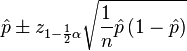
In the "PNoy" tab, I have computed for the confidence interval for each sample (i.e., canvas result) using the formula below at the significance levels 0.05 and 0.01 (significance levels basically measure how much room for error you are willing to accept).
Confidence intervals make comparing two estimates easier. Basically, if the confidence intervals for two estimates overlap, then they are statistically equal. BUT if the confidence intervals don't overlap, then there is enough statistical evidence that the estimates are not equal.
In the "PNoy Confidence Intervals" and "PNoy Confidence Intervals (2)" tabs, I have compared the confidence intervals of the proportion estimates for each canvas using significance levels of 0.05 and 0.01, respectively. Both results show that out of 120 confidence interval pairs, only 3 overlap (3 vs. 14, 9 vs. 10, and 6 vs. 8). This means that up to a 1% significance level, 117 out of 120 pairs are statistically different! This method therefore rejects the hypothesis that there is no variation in the data, or that the proportion of votes for Team PNoy is the same from canvas to canvas. Almost all of the proportions are statistically different!
Test 2: Chi-square goodness of fit test
We can use this test for the hypothesis "the proportion of votes that went to each political coalition is constant from canvas to canvas" in one step. The proportion of the total number of votes up to the 16th canvas is 59.63%. If we assume that the same proportion of incremental votes in each canvas voted for Team PNoy, then the coalition should get the expected number of votes E per canvas, as shown in the "Chi Square" tab.
The Chi square statistic is given by
If the statistic is big enough, it means that the set of observed or actual votes (O) for Team PNoy is statistically different from the set of expected votes (E), and the hypothesis is rejected.
The resulting Chi square statistic is 50,000+, which is more than enough to reject the hypothesis. Again, the data shows that the proportion of votes for Team PNoy is statistically different from canvas to canvas.
Test 3: The "Random Coalition" eyeball test
There are plenty of things in statistics (or in the entire universe, actually) that are counter-intuitive or are hard to understand.
Take this last "test," for example. Choose any 9 senatorial candidate at random from the list of 33. I used my calculator's "Ran#" to draft my "dream team" of random senatoriables:
![]() |
| Please click to enlarge. |
Plotting the percentages using the same axis as Dr. Muga, we get:
What wizardry is this? A similar pattern for a random group of candidates?
We also have to remember, however, that a lot of times, things are not as simple or straightforward as they look. The same data using a different vertical axis:
Replication of graph for Team PNoy proportion of votes that Dr. Muga posted in Facebook:
Same data, using a different vertical axis.
*Sigh*
I'm sure a lot of shenanigans happened in the last elections. There's one more thing that I'm sure of, though: whatever happened is not reflected by the data, and that the "interesting" pattern that Dr. Muga observed does not really exist.
Just remember two things: 1) the sample size matters; and 2) framing matters.
For those who missed it, the Excel file that contains all the data and analysis is here.
Labels:
Does Not Subscribe to Labels
Saturday, February 2, 2013
Thursday, January 31, 2013
Taxikick
Near the end of last year, this happened to my girlfriend:
I should've taken it as a sign (blah blah blah) that Christmas is in the air. Watch out for the Airport Metered Taxi (Yellow Taxi) with plate number - TYT 449.
On November 05, I arrived at NAIA at around 10 PM and took the Airport Metered Taxi (Yellow Taxi) home. When I got on, the driver told me they had to charge a fixed rate of 640, to the area where I lived. When I asked why, he said because it was after 10 PM. Hmmm. OK. This was the driver of TYT 449.
On December 03, I arrived from another trip, also at 10 PM. Before I got into a Yellow Taxi, I verified with the guy who issues receipts whether I will be paying a fixed rate, or will be going by the meter. He confirmed I will be charged by the meter.
"Even at this time (10 PM)?".
"Yes, ma'am."
And there you go. True enough, the driver of the cab I took on December 03 didn't even mention a fixed rate, and I paid according to the meter.
Whereas before, we just treated such events as an unavoidable part of life and "experience earned," with Taxikick, we get an opportunity to fight back. Taxikick is an online tool that provides users with an easy way to report abusive taxi drivers in the Philippines. It also displays helpful information such as the plate numbers of frequently-reported cabs and actual reports of victim-passengers.
User complaints or "kicks" are forwarded to the LTFRB at the end of each day.
The platform is great, and I laud the founders for spending time and resources in creating and managing the website. I hope that they have plans for a mobile app that allows picture uploads (imagine being able to see actual photos of notorious drivers). Come to think of it, even a way to upload pics from a desktop would do.
And I wish the LTFRB actually does something about the reports and complaints.
Always stay safe, everyone.
I should've taken it as a sign (blah blah blah) that Christmas is in the air. Watch out for the Airport Metered Taxi (Yellow Taxi) with plate number - TYT 449.
On November 05, I arrived at NAIA at around 10 PM and took the Airport Metered Taxi (Yellow Taxi) home. When I got on, the driver told me they had to charge a fixed rate of 640, to the area where I lived. When I asked why, he said because it was after 10 PM. Hmmm. OK. This was the driver of TYT 449.
On December 03, I arrived from another trip, also at 10 PM. Before I got into a Yellow Taxi, I verified with the guy who issues receipts whether I will be paying a fixed rate, or will be going by the meter. He confirmed I will be charged by the meter.
"Even at this time (10 PM)?".
"Yes, ma'am."
And there you go. True enough, the driver of the cab I took on December 03 didn't even mention a fixed rate, and I paid according to the meter.
Whereas before, we just treated such events as an unavoidable part of life and "experience earned," with Taxikick, we get an opportunity to fight back. Taxikick is an online tool that provides users with an easy way to report abusive taxi drivers in the Philippines. It also displays helpful information such as the plate numbers of frequently-reported cabs and actual reports of victim-passengers.
User complaints or "kicks" are forwarded to the LTFRB at the end of each day.
The platform is great, and I laud the founders for spending time and resources in creating and managing the website. I hope that they have plans for a mobile app that allows picture uploads (imagine being able to see actual photos of notorious drivers). Come to think of it, even a way to upload pics from a desktop would do.
And I wish the LTFRB actually does something about the reports and complaints.
Always stay safe, everyone.
Labels:
Does Not Subscribe to Labels
Monday, December 31, 2012
The Best Cup of Coffee in Sagada...
... Only costs 20 pesos.
The best things in life aren't free, but they also don't have to be very expensive.
It has been a very fruitful 2012. My head will explode in excitement and anticipation for things that are lined up for 2013. Happy New Year everyone!
Labels:
Does Not Subscribe to Labels
Monday, November 19, 2012
Pinoy (Pride) Pity
A GUEST POST by Anonymous
My boyfriend and I booked a biking tour when we visited Bangkok 2 weeks ago. Our first rest stop was at a park, leading to the “slums” – shanties put up under the bridge. Our tour guide Cha (pronounced Djaaa~, if you please), was quick to say, “The people who live here are not poor. There are no people in Thailand.”
I’m not sure what the Dutch and Danes in our party thought, but I was waiting for a punch line.
Here’s what followed instead: “The people who live here [in the slums] are not poor. They choose to live here so they won’t have to pay for rent, which means, they can send more money back home to their families. When you are poor, it means you have no food, no work. But anyone can get a job in Thailand. They can work as taxi drivers, truck drivers – anything. You will not see Thai people begging on the street. The beggars you see around are probably from Cambodia.”
That’s just all sorts of wrong, isn’t it? I certainly don’t believe there are no poor people in Thailand (You may open a new tab to Google the numbers). Those people who live in the shanties probably wouldn’t if they didn’t “have to”. But the stigma of begging – that was something to think about.
I personally think begging is obscene. This has nothing to do with those who beg, but having to resort to begging, is something I would never wish upon anyone. There is no shame in being poor, but there is shame in having to beg, and shame that you live in a world where your fellow has to beg from you.
I pity those who have to resort to begging. Pity, but nothing else. I sympathize with people for whom life is a burden. I respect people who ask for help. I admire people who are determined to help themselves. But I only feel pity for people who beg.
A beggarly attitude, though, is downright offensive. If you’re looking forward to Christmas as a time to receive dole outs from your wealthier relatives, it means you probably can’t afford Christmas. But if you intend to make the rounds bringing home made dinuguan, you have something to say for yourself (please stop by our house too – I beg of you!).
Here’s Emile Gaboriau, describing, Pascal Ferailleur, a young man in his crime novel, The Count’s Millions. Pascal’s widowed mother was cheated out of the millions earned by his late father, leaving them destitute:
“With a tact unusual for his age [a 12-year-old Pascal], or indeed at any other, he bore his misfortunes simply and proudly without any of the servile humility or sullen envy which so often accompanies poverty.”
-- The Count’s Millions
Lack of pride in oneself leads one to beg—for money, food, a savior, a miracle…Pride, not arrogance, is good. Pride is not false bravado nor is it stubbornness. Pride is not incompatible with humility. Pride means you believe you have something of value, even though you live in a shanty under a bridge. Pride means living in a shanty under a bridge, rather than begging. Pride can be found in being a truck driver, taxi driver—anything—but not in being a beggar. A laborer can look his employer in the eye and demand his pay. A beggar must accept what he can get.
If Cha is speaking for Thailand, it looks to me they’re aiming for the right thing—70,000,000 people who have confidence in themselves, and not 70,000,000 people who need to be saved.
The Philippines’ and Thailand’s numbers aren’t so disparate, yet I get the impression that we are perversely proud of being “poor” and welcome pity. We are quick to paint ourselves as long-suffering victims and are ready with a list of people to blame. But we lose interest in ideas for a solution – especially if it means we have to wait in line like everybody else, or if the solution isn’t as dramatic and sweeping as a lottery win.
If I’ve got it wrong, and this attitude reflects the refusal to put in work (and not about despair / confidence at all), then I guess we’re getting what we want. And we are very good at pitying ourselves.
My boyfriend and I booked a biking tour when we visited Bangkok 2 weeks ago. Our first rest stop was at a park, leading to the “slums” – shanties put up under the bridge. Our tour guide Cha (pronounced Djaaa~, if you please), was quick to say, “The people who live here are not poor. There are no people in Thailand.”
I’m not sure what the Dutch and Danes in our party thought, but I was waiting for a punch line.
Here’s what followed instead: “The people who live here [in the slums] are not poor. They choose to live here so they won’t have to pay for rent, which means, they can send more money back home to their families. When you are poor, it means you have no food, no work. But anyone can get a job in Thailand. They can work as taxi drivers, truck drivers – anything. You will not see Thai people begging on the street. The beggars you see around are probably from Cambodia.”
That’s just all sorts of wrong, isn’t it? I certainly don’t believe there are no poor people in Thailand (You may open a new tab to Google the numbers). Those people who live in the shanties probably wouldn’t if they didn’t “have to”. But the stigma of begging – that was something to think about.
I personally think begging is obscene. This has nothing to do with those who beg, but having to resort to begging, is something I would never wish upon anyone. There is no shame in being poor, but there is shame in having to beg, and shame that you live in a world where your fellow has to beg from you.
I pity those who have to resort to begging. Pity, but nothing else. I sympathize with people for whom life is a burden. I respect people who ask for help. I admire people who are determined to help themselves. But I only feel pity for people who beg.
A beggarly attitude, though, is downright offensive. If you’re looking forward to Christmas as a time to receive dole outs from your wealthier relatives, it means you probably can’t afford Christmas. But if you intend to make the rounds bringing home made dinuguan, you have something to say for yourself (please stop by our house too – I beg of you!).
Here’s Emile Gaboriau, describing, Pascal Ferailleur, a young man in his crime novel, The Count’s Millions. Pascal’s widowed mother was cheated out of the millions earned by his late father, leaving them destitute:
“With a tact unusual for his age [a 12-year-old Pascal], or indeed at any other, he bore his misfortunes simply and proudly without any of the servile humility or sullen envy which so often accompanies poverty.”
-- The Count’s Millions
Lack of pride in oneself leads one to beg—for money, food, a savior, a miracle…Pride, not arrogance, is good. Pride is not false bravado nor is it stubbornness. Pride is not incompatible with humility. Pride means you believe you have something of value, even though you live in a shanty under a bridge. Pride means living in a shanty under a bridge, rather than begging. Pride can be found in being a truck driver, taxi driver—anything—but not in being a beggar. A laborer can look his employer in the eye and demand his pay. A beggar must accept what he can get.
If Cha is speaking for Thailand, it looks to me they’re aiming for the right thing—70,000,000 people who have confidence in themselves, and not 70,000,000 people who need to be saved.
The Philippines’ and Thailand’s numbers aren’t so disparate, yet I get the impression that we are perversely proud of being “poor” and welcome pity. We are quick to paint ourselves as long-suffering victims and are ready with a list of people to blame. But we lose interest in ideas for a solution – especially if it means we have to wait in line like everybody else, or if the solution isn’t as dramatic and sweeping as a lottery win.
If I’ve got it wrong, and this attitude reflects the refusal to put in work (and not about despair / confidence at all), then I guess we’re getting what we want. And we are very good at pitying ourselves.
Labels:
Does Not Subscribe to Labels,
Guest Posts
Wednesday, October 31, 2012
What If Money Were No Object?
Despite once saying that true "self-help" is never philosophical, I beg you to permit me to be philosophical this one time.
What would you do if money were no object?
Few of us have a ready answer to this question because it's a question that's rarely asked. Maybe it's because for many of us, money being no object is an unthinkable, an unattainable state of being. I think for this fortunate (?) majority, it's less a function of how much wealth one has, but more the constant drive for the "better" and the "more." My Atenean friends, that's magis, right?
Anyway, for argument's sake--please indulge me--let's say that it's possible for money to be no object, for it to not matter. Lets hypothesize: If money were no object, how would you live your life?
I'll start. Studying, learning, teaching, doing research. Spending lots of time with my girlfriend, my family, my friends. Collecting toys, building model kits, building furniture, cooking. Running, biking, hiking, snorkeling, traveling, exploring. Reading, reading, and reading some more. Spending time writing posts for Investor Juan and facilitating financial literacy classes for Project Be.
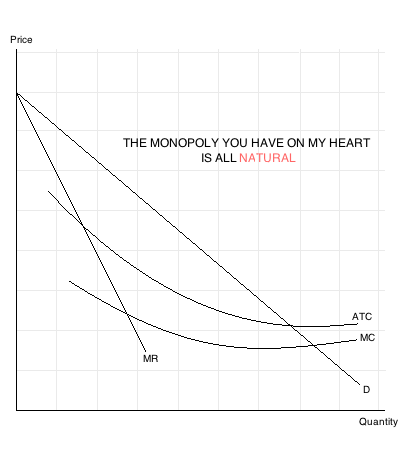
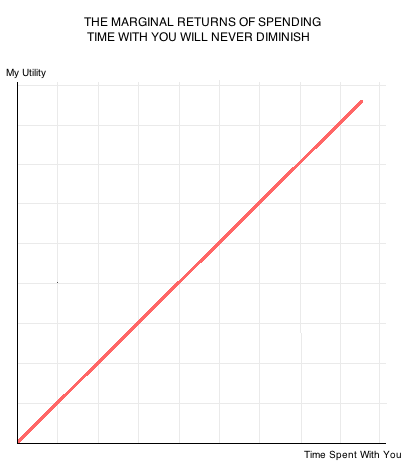
So I guess I can call myself lucky because if money were no object, I'd more or less be living the same way I do now.
How about you? What would you do if money were no object?
Labels:
Does Not Subscribe to Labels,
Videos
Sunday, September 30, 2012
Anonymous Indignation
We Filipinos love the Internet. We share quotes, memes, photos, jokes, interesting reads, and funny videos on Facebook. We tweet the little things we do, what we eat, our thoughts, our ideas, our witticisms. We share, we like, we comment, we poke (I'm not so sure, do people still do this)? Maroon 5, the Azkals, and Oppa Gangnam Style make you happy, and stupid senators and epal politicians make us angry, and people like Jesse inspire us and make us proud to be Filipinos. The Internet divides us during elections and over UAAP games but unites us during catastrophes. We are loud and we are proud of the things we hear, do, and say online... right?
But then why are we so quiet about this?
And why does this article have 25 comments and 609 likes while this only has 7 comments (13 including replies) and 153 likes?
It's okay, these are rhetorical questions after all, so you don't really have to answer. Maybe it does not really matter, maybe there's no reason not to be quiet... and maybe in the end we will just get what we deserve.
But then why are we so quiet about this?
And why does this article have 25 comments and 609 likes while this only has 7 comments (13 including replies) and 153 likes?
It's okay, these are rhetorical questions after all, so you don't really have to answer. Maybe it does not really matter, maybe there's no reason not to be quiet... and maybe in the end we will just get what we deserve.
Labels:
Does Not Subscribe to Labels
Monday, September 10, 2012
Investor Juan v3.0
![]() |
| v1.0 |
![]() |
| v2.0 |
It's about time.
In a little less than two years, the old design had become just that--old.
It's about time I realized that my "artistry" has its limitations.
And it's about time I started paying a professional to improve the look (and credibility) of this website. As my favorite philosopher has been known to say: "Sometimes you have to pay a premium for the good things in life." Fortunately, in this case the premium is actually pretty reasonable.
This design was made by my former student, Lisha. She does good designs, works fast, and charges reasonably. If you're interested, check out her Facebook page. (By the way, I'm not paying for the design with this plug, but with REAL money.)
AND, I found out just now as I am writing this, that I have already used up the 1 GB storage quota (which I use for blog images) for my Google accounts. Now I have to pay 2.49 USD a month to upgrade to 25 GB, which isn't that bad, really...
Labels:
Does Not Subscribe to Labels
Tuesday, August 21, 2012
Thank You Jesse!
![]() |
| Image from Rappler |
Join the nation in honoring Secretary (and former Naga mayor) Jesse Robredo at Salamat Jesse.
Labels:
Does Not Subscribe to Labels
Tuesday, August 7, 2012
The Universe is Angry
I just arrived in Manila. I have to be here for a few days to gather data for my dissertation and to facilitate the first of two classes for the CFA review that were assigned to me.
I spent two hours in the airport waiting for a cab. I'm wet, I'm tired, and I'm hungry. My internet connection is wonky, so I can't finish the post that I had originally planned to publish today. But I know that I have no reason to complain as thousands of our countrymen are in a much, much worse predicament as I am.
Given how the rains have hardly abated since early this morning, those of us who are in the relative safety and comfort of our homes can't really do anything at this moment but wait and hope for things get better tomorrow. As soon as we are able to, however, we have a responsibility to do what we can for those who are not as fortunate as we are. There's no doubt in my mind and in my heart that that we all will get though this with our heads held high, as we always have.
Stay safe, everyone.
Labels:
Does Not Subscribe to Labels
Wednesday, May 23, 2012
Liu Hai and the Golden Toad
Have you ever seen a figure of a fat frog (it's actually a toad), sometimes sitting on top of a pile of coins, with a single gold coin in its mouth?
It's easy to see how the toad would have something to do with luck and making money, but have you ever wondered what's the story behind the toad and why, upon closer inspection, does it have only three legs.
The toad comes from the ancient Chinese story, "Liu Hai Teasing the Golden Toad." Liu Hai one of a handful Chinese deities of money and wealth. He is often portrayed adorned with a string of gold coins and accompanied by a three-legged toad. In one version of the story, Liu Hai and the toad are friends; whenever the toad gets trapped in a well, Liu Hai uses a line baited with gold to fish it out. In another version, the toad is an evil monster who lived in a deep pool and terrorized villagers with its noxious fumes; Liu Hai exploits the toad's greed by using a line of gold coins to catch and destroy it. Regardless of the version, Liu Hai and his toad have become popular symbols of prosperity and wealth in Chinese folklore and history (nowadays the latter more than the former).
If you happen to find yourself in Hong Kong, be sure to check out the exhibition "Cruising the Universe: Fantastic Animals in the Arts of China" at the Hong Kong Museum of Art. The collection features some interesting works depicting Liu Hai and the three-legged toad, among other things. Here are some of the pieces you'll see in the exhibition (they look much, much better in person, of course).
It's easy to see how the toad would have something to do with luck and making money, but have you ever wondered what's the story behind the toad and why, upon closer inspection, does it have only three legs.
The toad comes from the ancient Chinese story, "Liu Hai Teasing the Golden Toad." Liu Hai one of a handful Chinese deities of money and wealth. He is often portrayed adorned with a string of gold coins and accompanied by a three-legged toad. In one version of the story, Liu Hai and the toad are friends; whenever the toad gets trapped in a well, Liu Hai uses a line baited with gold to fish it out. In another version, the toad is an evil monster who lived in a deep pool and terrorized villagers with its noxious fumes; Liu Hai exploits the toad's greed by using a line of gold coins to catch and destroy it. Regardless of the version, Liu Hai and his toad have become popular symbols of prosperity and wealth in Chinese folklore and history (nowadays the latter more than the former).
If you happen to find yourself in Hong Kong, be sure to check out the exhibition "Cruising the Universe: Fantastic Animals in the Arts of China" at the Hong Kong Museum of Art. The collection features some interesting works depicting Liu Hai and the three-legged toad, among other things. Here are some of the pieces you'll see in the exhibition (they look much, much better in person, of course).
Labels:
Does Not Subscribe to Labels
Sunday, April 1, 2012
4 Things That Need To Be Done
Yeah, I've just turned 35, which kinda sucks. So I've spent the last couple of weeks thinking about things--my studies, this blog, my investments, my life--and I have realized that some changes need to be made.
1. Invest more aggressively. Ever since I got here, the Hong Kong stock market has been nothing but boring. This more-or-less led me to liquidating most my investments a couple of weeks ago. And seeing that things have been doing very well for the Philippine stock market in the past several of months, I have decided to transfer a sizable chunk of what I own to that market. But I don't want to just hop on the bandwagon--I want to beat it, so I am going to pick a few select mining stocks and go ALL IN (I'm looking at you, GEO).
2. Live a little. What remains after investments, I will use to buy a new car. I've gotten tired of Hong Kong's public transportation system, it has become "too efficient" for me. So I'll use the money I have left (plus whatever I can borrow from the bank) to buy a new Audi A3.
3. Get a girlfriend, BECAUSE I DON'T HAVE ONE. I really hope the car would help.
4. End Investor Juan. I have already given more than two years of my life to this seemingly fruitless cause, and I have just reached a point when I feel that enough is enough. Now I just want to concentrate on finishing my studies and enjoy my life, because ultimately IT'S ABOUT ME AND NOT ANYONE ELSE. I guess nothing more needs to be said about that.
Wait, I lost track of time. What date is it again?
EDIT 02 APR 2012
Labels:
Does Not Subscribe to Labels,
Lists
Monday, February 20, 2012
14 Ways an Economist Says I Love You (A Very Belated Valentine Post)
Yep, I don't get all of them either. :)
These were all created by a very talented and intelligent young lady, whose other ideas and works may be found on this website.
Labels:
Does Not Subscribe to Labels,
Lists
Friday, February 3, 2012
Happy Second Birthday to Us!
Time does fly when you're having fun, doesn't it?
Our second year may be best described as a year of GROWTH, with 4 times as many unique visitors and page views as our first year. Not only is there more of YOU, you also read more posts and spend more time on the website than the same period last year. By any measure, this would be considered a tremendous success, and it's all thanks to YOUR continued readership, comments, and participation. And last but not the least, I also want to thank those who were kind enough to share their ideas and experiences with us: Kat, Renzie, and Anonymous.
So what's in store for Year 3? I'll try my best to write more timely, practical, and informative posts, of course. Maybe a new look? And this year I'm going to form a team that's going to work on a BIG project, so let's keep our fingers crossed for that. Finally, and most importantly, I wish everyone better investment returns in the year ahead. :)
Most Popular Posts
5. Investing with US Dollars in the Philippines (Part 2: US Dollar Unit Investment Trust Funds)
4. 6 Steps: A Guide for Newbie Investors (Part 1)
3. Is Now a Good Time to Invest in Stocks?
2. 4 Important Benefits of Banco de Oro's Easy Investment Plan
1. Investing in Philippine Stocks, Part 1: The Basics
Labels:
Does Not Subscribe to Labels
Tuesday, July 12, 2011
6 Years in the Waiting
I have waited for this for six years... and it had just been delivered to my Kindle a few minutes ago.
I'm sure that many of you are already familiar with the author and his opus, what with the recent success of the HBO series Game of Thrones. I'm also sure that more than few of you who have seen the HBO series have decided to give the books a try, and have already been pleasantly (or unpleasantly) surprised by Martin's continued masterful, savage, and unapologetic treatment of both plot and character. If you haven't seen the TV series nor read the books yet, I suggest that you give either (or better, both) a chance and I promise that you will be immensely rewarded for your time and money.
Save that last mention of the word "money," you might have already realized that this post has nothing to do with investments or finance. I think we all could use a break from all that, and what better way to take a break than to spend many a sleepless night dancing with dragons.
Labels:
Does Not Subscribe to Labels
Monday, June 27, 2011
You are What You Listen To: Music Preference and Attitude Towards Money
What does your music preference say about your financial habits? According to this recent study by Canadian researchers, quite a lot!
The results of the study show that young adults who regularly listened to ‘adult-approved’ music would be likely to save money, while youths who listened to ‘anti-authority’ music were expected to be more likely to spend their money impulsively. I don't know about you, but music is a very important part of my life; in fact, I can't even begin to imagine life without music (although the world would probably be immensely better off without "The Biebs" or Lady Gaga or both). My music is a big part of who I am and I take it very personally and seriously, so when someone tells me that what I listen to leads to a certain behavior or way of thinking, I tend to shut up, listen, and look at the fine print.
So what does the study exactly mean by ‘adult-approved’ and ‘anti-authority’ music? The authors initially classified various musical genres, based on previous studies, into the following
- Adult-approved
- classical
- musicals
- opera
- world music
- oldies
- easy listening
- alternative
- Anti-authority
- bluegrass
- blues
- hip-hop
- rap
- techno
- trance
- electronic
- house
- dance
- R&B
- reggae
- heavy metal
- punk
- ska
- new age
As it turns out, the results show that not all genres belonging to a particular group have a statistically significant relationship with financial attitude. To be more specific, only the following genres were found to be significantly associated with spending and saving habits.
So what exactly do these results mean? It means young that young people who regularly listen to dance, electronic, hip-hop, house, rap, R&B, techno, and trance are likely to spend more and those who listen to punk, oldies, alternative, and contemporary rock are likely to spend less; also, young people who are into big band and classical music, musicals, opera, and world music are likely to save more.
With the limitations of the study and the statistical procedure employed (remember, correlation does not necessarily mean causation), we should take these results with a grain of salt. However, I can't help but smile and marvel at the plausibility of these results, especially when I think about the MTV Cribs episodes that I've watched and how many of my friends who are heavily into hip hop and R&B are actually big spenders. I don't have any problems with listening to more Sex Pistols and Pearl Jam--maybe Cats and Phantom of the Opera even--but I draw the line at Luciano Pavarotti! :)
Labels:
Does Not Subscribe to Labels
Subscribe to:
Posts (Atom)