Showing posts with label Stuff I Learned from Books. Show all posts

Wednesday, December 5, 2012

Short Answers to Unanswered Questions: Catching Up with Emails

DEAR INVESTOR JUAN


Dear Investor Juan,

Hello there!

I happen to read some of your entries while self-educating on investing. I am a 19-yr old fresh grad who is very interested to know more about investing. As of now, I am reading stuffs about stocks and mutual funds. I know they are risky and that's why I read a lot. If you are kind enough to send me some ebooks about investing for beginners, I'd really appreciate it.

All the best,
Donna


Dear Donna,

You might want to start with Burton Malkiel's A Random Walk Down Wall Street.


***


Dear Investor Juan,

I have been subscribed to your posts ever since and I appreciate your sharing of your knowledge in finance.

Bloomberg.com used to publish company betas (including PSE listed stocks). These betas could no longer be seen since they have replaced their "portfolio" feature to just a "watchlist".

I have checked Thomson Reuters (Reuters.com) and their betas are wrong since they are based on S&P500.

Do you know of other sites that compute and publish these betas?  I don't have much historical data so it is also hard to compute by myself (plus a bit time-consuming hehe)

Best Regards,
ScIoN


Dear ScIoN,


Sorry for the late reply.

As far as I know there are no locally-published betas for Philippine stocks. There was one study made by Dr. Joel Yu of the UP College of Business Administration on CAPM for Philippine stocks; I think this paper includes estimates for beta, so you might want to check it out. Not sure if the paper is available online, if not you can contact Dr. Yu for a copy, I'm quite confident that he will grant your request (he was my MBA prof, and he's quite a nice guy).

If you're going to do serious analysis, I suggest that you buy data from the PSE and just compute for beta on your own. Easy enough to do with Excel if you have data.


Dear Investor Juan,

Do you know what happens to your stocks if your brokerage firm goes bankrupt?

Thanks,
Eugene


***

Dear Eugene,

If your broker goes bankrupt, you would still own your shares and both you and the broker would have records of your share holdings. And since your broker would not have physical "possession" of your money or shares, it would not be able to use these to satisfy its financial obligations as it goes through bankruptcy. I'm not sure exactly how it would work, but as far as I know you should be able to trade your shares through another broker.

I hope this helps.


***

Dear Investor Juan,

I have saved up a few thousand dollars from working for an international company, recent news says that exchange rate could go as Php 32 to USD 1.

It is tucked away on a regular dollar account, do you think I should convert it to pesos? Or it is far better on dollar denominated UITFs? Or just keep it on my savings account? 

Thank you in advance.

Anthony


Dear Anthony,

Yeah I'm in the same boat with my HKD. 32 to 1? It's possible, but I'm not so sure.

Just based on historical exchange rates, right now the Philippine Peso is very expensive compared to the USD. So regardless of whether the peso will continue to strengthen or revert to its level a couple of years ago, I suggest that you keep your earnings and savings in USD or USD denominated securities, and just convert to peso as needed. The choice between a USD savings account and a USD UITF is an investment decision, though, and would have a different set of considerations.


***

Dear Investor Juan,

Just would like to ask kung maganda bang investment vehicle for an OFW ang UITF? let's say po for 5 year term. gagamitin ko sana as my appliance fund sakaling makabili me ng bahay. Ano po ang maipapayo nyo sa akin, para magamit ko po ito to maximize my investment potential. I already have an emergency fund, meron din po akong Insurance (vul), may EIP po ako, tsaka may nakalagak po akong pera sa SUNLIFE flexilink na nasa equity fund. Thank you po for reading my letter and more power to you.

Regards.
Bob


Dear Bob,

Yes, UITFs in general are good investment vehicles for anyone, not just OFWs, as long as you know and accept the risks involved. Actually, you are already invested in UITF-like instruments with your VUL, EIP, and Sunlife fund. What I suggest is that if you want to invest more in UITFs and mutual funds, just add to your current holdings instead of investing in a new one. Adding more funds to keep track of would just result in additional hassle (and possibly, costs) without any significant additional benefits.

I hope I was able to answer your questions, Bob. Good luck.

Wednesday, July 11, 2012

Why Do We Spend So Much Money on Stuff?

STUFF I LEARNED FROM Robert and Edward Skidelsky's How Much Is Enough? Money and the Good Life


In investigating why people seem to have lost sight of the quest for the "good life" (as articulated by Keynes in his 1930 essay "Economic Possibilities for our Grandchildren"), the authors look for explanations for insatiability and conspicuous consumption. This search leads to the pioneering work of Harvey Leibenstein more than half a century before credit cards and online shopping: "Bandwagon, Snob, and Veblen Effects in the Theory of Consumers' Demand." Here, Leibenstein posits that apart from the "utility" that a good or commodity directly provides--a concept which is at the heart of classical consumer theory--buying decisions are also affected by external effects on utility which the author refers to as the "bandwagon" effect, the "snob" effect, and the "Veblen" effect.

The bandwagon effect pertains to how demand for a good is increased because other people already have it. It is borne partly of conformity--"keeping up with the Joneses"--and partly of envy. Both mechanisms are strong in children, which may cause parents to work harder to satisfy this want, and in individuals and households with limited means or of lower socio-economic standing. Examples include everything your neighbor has which you don't have and makes you salivate.

How do we begin to covet, Clarice?
The snob effect, of the other hand, is the exact opposite of the bandwagon effect: it refers to the extent to which the demand for a commodity is decreased because other people (or too many of them) already own it. It follows, of course, that "snob goods" are desired because others do not have them; they are not necessarily the most expensive, but mark their possessors as having superior taste. This effect represents the desire of people to be exclusive and to stand apart from "the crowd." Examples include everything marketed by Apple.


Despite being polar opposites, snob goods can easily transform into "bandwagon goods," leading to their abandonment by the snobbiest of the snobs.


The Veblen effect (named after American economist and sociologist Thorstein Veblen) overlaps the two effects above: it pertains to the extent to which the demand for a good is increased because it is expensive and known to be expensive. Like bling on your favorite hip hop artist, Veblen goods are simply advertisements of wealth. Examples include everything you don't need and cannot afford.

"I Am Rich." Remember this?

To clarify, there's an important distinction between the snob and the Veblen effect--the former is a function of the consumption of others, the latter is a function of price.

I know how hard it can be to avoid or even just lessen the above effects on our spending decisions: after all, the opinions of people we interact with do matter to some (or a great) degree. Just remember that continuously succumbing to bandwagon, snob, or Veblen effects will just compromise our financial capabilities and delay our journey towards the good life.

Thursday, April 21, 2011

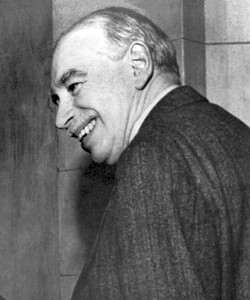
3 Motives for Holding Cash According to John Maynard Keynes

STUFF I LEARNED FROM John Maynard Keynes's "The General Theory of Employment, Interest, and Money"


This post partly comes as a response to one of our readers' comments to the guide to newbie investors I posted a couple of weeks back:

Hi, I'm new. Is it ok if I skip a lil bit step 2? and start investing?

-Normel

Normel is referring to the "Build up your emergency fund" step of the guide, and I'm pretty sure that his apprehension is shared by many investors, even some of the more seasoned ones: many investors are wary of the lost opportunity to earn returns from higher-yielding investments when a significant amount of cash (6 to 8 months worth of expenses as was mentioned in this post) is tied in idle (or virtually zero-interest) assets like bank accounts. In this post, I will discuss important reasons why it makes sense for us to pay this opportunity cost, using arguments presented by the celebrated economist John Maynard Keynes in his seminal work, The General Theory of Employment, Interest, and Money.

1. The transactions motive. "The need of cash for the current transaction of personal and business exchanges."

Keynes disaggregates this motive into two sub-classes, the income motive and the business motive, but the rationale is pretty much the same for both: often there is a considerable time interval between when cash is needed and when it is available, such as when there are delays in its disbursement, as in the case of wages for individuals (income motive) and revenues or payments for businesses (business motive). If the need to spend cash is immediate (as is almost always the case) and the delay is considerable, sufficient cash must be readily available to bridge the gap.

2. The precautionary motive. "The desire for security as to the future cash equivalent of a certain proportion of total resources."

This is where the "emergency" in "emergency fund" comes from: we need to hold a certain amount of cash for unforeseeable and unexpected expenses that are not (or cannot be) covered by standard risk management instruments like insurance. In my opinion, this is the most important reason for storing cash in liquid and safe assets, as I've seen real assets unnecessarily liquidated (at steep discounts) and small fortunes get wiped out in a small amount of time because of catastrophic financial emergencies.

Keynes points out that the strength of the above motives partly depends on the cheapness and

the reliability of methods of obtaining cash, when it is required, by some form of temporary borrowing, since holding idle cash won't be necessary if it can be obtained without difficulty at the moment when it is actually required. In real life, though, since these sources of "temporary borrowing" can smell desperate need from a mile away and raise interest to unreasonable levels accordingly, it often makes more sense to just hold a substantial amount of cash and just pay whatever opportunity costs you incur.

3. The speculative motive. "The object of securing profit from knowing better than the market what the future will bring forth."

In general, the importance of the first two motives is driven by the usual activity of the economic system; the speculative motive, on the other hand, is more a result of extraordinary economic circumstances like financial crises and bubble bursts that result in irrationally depressed asset prices and consequently, opportunities to earn abnormally high returns. Investors who had ample cash reserves during the 2008 financial crisis, and even at the height of the recent (and still on going) middle east unrest or the Japan disaster, could have taken advantage of depressed stock prices and made a considerable killing a reasonable amount of time after, provided they are able to keep their heads amid an environment of mob-market panic selling. If we look at how markets have recovered from these lows, it's easy to see how the cost of not having enough cash to take advantage of these circumstances could be very significant.

To end, these motives show us that there are tradeoffs involved in holding cash: while we lose the opportunity to earn (possibly) high returns from investing in risky assets like stocks and bonds, maintaining cash reserves also provides valuable benefits by protecting us from unpredictable, risky situations and giving us the capability to exploit rare opportunities to invest at a bargain. Hopefully, with these points it would be easier for investors to understand why it is important to first build an emergency fund before one invests in high-risk, high-return assets.

Friday, February 4, 2011

7 Values that Make Chinese-Filipino Businesses Successful

STUFF I LEARNED FROM S. Gordon Redding's "The Spirit of Chinese Capitalism"


If there's one thing we know, one thing we are sure of, about business, it's that the Chinese are very good at it. If you take a look at Forbes' list of richest Filipinos in 2010, you'll find that 7 out of 10 are of Chinese descent. Ask anyone you know to name a successful businessperson, it's almost certain that that person will quote a Chinese name. And this phenomenon is not exclusive to the Philippines--we see it in other countries in the region as well, what with Dhanin Chearavanont of Thailand, Robert Kuok of Malaysia, Sudono Salim of Indonesia, just to name a few.

So it's not surprising to hear many aspiring entrepreneurs ask, "What makes these successful Chinese businessmen and families tick?" And with today being the Second Day of the Lunar New Year celebrations, it's as good a time as any to try to answer this question.

I say "try" because there is no one, clear cut answer. But one of the more popular schools of thought is that it's all about the culture--Chinese culture in particular--and the beliefs and values that come with it. And with that, let's go through this list from Gordon Redding's seminal work that can help us better understand what separates Overseas Chinese businesses from all the others.

1. Collectivism and familism. Among the Chinese, there is a greater emphasis on an individual's connections and relationships with others than the individual in isolation, and that the only essential and most important grouping within which this individual exists is the family.

2. Limited and bounded trust. Of course the Chinese know that the family is surrounded by people on the outside that it needs to coexist and interact with: an extended network consisting of relatives, friends, and business partners, and society-at-large, which includes everyone else. Within these two societal spheres, the Chinese follow a simple rule: trust family absolutely; your friends and acquaintances to the degree that mutual dependence has been established and face invested in them; with everybody else, no assumption about goodwill.

3. Guanxi or personal connections, which is clearly an offshoot of the two items above. It is widely believed that this network of connections is one important source of competitive advantage, an exclusive asset that Overseas Chinese use to get ahead in business.

4. Hsiao or filial piety. Absolute obedience to the father, the head of the family. It comes from a set of rules about deference that define important relationships within the family, with the five most important ones being (in descending order of importance): father-son, husband-wife, elder brother-younger brother, ruler-subject (or boss-subordinate), and as well as hierarchical distinctions.

5. Work ethic and hard work. In a society where each family is dependent on its own resources for survival, and where each individual is in turn dependent on family support for so much in life, the person who is not working as hard as he or she might for the common good will come under intense social pressure.

6. Money, frugality and pragmatism. Money-mindedness is often attributed to Southern Chinese, the regional group where most Chinese-Filipino families originate from. In these families, children are taught early to value money and not be easily deprived of it, and to bargain. Also, unlike in conservative Western thinking in the olden days, to the Chinese the pursuit of riches is seen as being respectable. Of course, historically, frugality is the result of "being so poor for so long" for many of the first generation of Chinese immigrants, and has eventually become a matter of pragmatism for later generations.

7. Li, or good manners and gentlemanly conduct. With the concept of collectivism and familism above, it results in the importance of "face," how the behavior of an individual may affect not only his or her reputation, but the social standing of the entire family as well.

Monday, October 4, 2010

10 Exercises: A Fitness Manual for Random Walkers (Part 2)

STUFF I LEARNED FROM Burton G. Malkiel's "A Random Walk Down Wall Street"


6. Begin Your Walk at Your Own Home; Renting Leads to Flabby Investment Muscles

"A good house on good land keeps its value no matter what happens to money. As long as the world's population continues to grow, the demand for real estate will be among the most dependable inflation hedges available."

Land is a scarce resource whose supply is limited; demand for land goes up as the population grows. We all know from Economics 101 that this interplay between supply and demand could only lead to higher prices in the future; it's hard to argue with the soundness of this reasoning.

But as they say, the devil is in the details. Important issues continuously face the would-be real estate investor. For example, we all know that investing in real estate entails significant capital, usually upwards of 1 million pesos for any decent piece of property. As most investors don't have that kind of investable cash at hand, the only available recourse is debt. But borrowing at, say, 7% per year (roughly Pag-ibig's interest rate per annum for a 1 million peso housing loan) will only make sense if you anticipate that the value of your property will grow at least 7% per year, or if you think investments of comparable risk (like say, stocks) will yield higher annual returns in the long run. The point is that investing in real estate is not an automatic investment win, and is not always the best alternative under particular circumstances.

Second, as in all investment situations, the investor makes financial decisions in an uncertain environment. The housing bubble in the US which led to the financial crisis in 2008, and the devastating blow dealt by typhoon Ondoy on the Marikina and Pasig real estate markets last year, will make any investor think twice before making any real estate purhcase. But we have to remember that these things are part and parcel of investment dynamics, and that instead of ineffectively trying to preempt what can happen, maybe the best thing to do is protect ourselves with things like insurance and diversification.

7. Beef Up with Real Estate Investment Trusts

"If you want to move your portfolio toward terra firma, I strongly suggest you invest some of your assets in REITs."

A real estate trust fund or REIT (pronounced as reet) is a corporation that invests in real estate, and whose earnings are distributed to investors at a lower tax rate. Basically, a REIT is to real estate as mutual funds or UITFs are to stocks and other financial assets.

REITs may be public or private; shares of public REITs may be traded on public exchanges, like the Philippine Stock Exchange. REITs make investing in real estate easier for individual investors as real estate portfolios are divided into a number of shares, resulting in more affordable minimum required participation.

In July 2007, Senate Bill number 63 or the Real Estate Investment Trust Act was passed in congress. Big players in the real estate market are just starting to capitalize on this new way to attract investor funds, with Ayala Land recently setting up a REIT that will be offered to the public in the near future.

8. Tiptoe through the Investment Fields of Gold and Collectibles

"The Honda Accord in your backyard can rust, and the three-year-old TV dinner in your freezer may not taste very good. I tend to prefer the kinds of assets that produce a return while they are giving inflation protection."

Some people mistakenly believe that the best way to fight inflation is to buy stuff now, while prices are presumably lower, rather than later. The problem with this "strategy" is that not everything can be consumed all at once, and most "stuff" that remain lose a portion, and eventually all, of their value over time.

Investing, by definition, involves buying something that can either provide a stream of future income, or whose price can appreciate in the future, or both. Unfortunately, just buying any kind of good does not meet either of these criteria. One might argue that a valuable commodity like gold is not like other "stuff": while it does not generate periodic income, its price can definitely appreciate considerably at any given time. But because the price of gold is mostly determined by investor speculation, and thus can be very volatile, Malkiel recommends holding just a small portion (around 5%) in your portfolio by buying shares of funds that invest in gold.

9. Remember that Commission Costs Are Not Random; Some Are Cheaper than Others

"With the advent of competitive commission rates, it has now become possible to buy your brokerage services at wholesale prices."

As we've seen with UITFs in the Philippines, the fees fund managers charge can vary greatly and can even result in considerable differences in annual returns. Unfortunately, the same can also be said of mutual funds, stock brokers, and other entities that provide financial services for a fee. In availing of these services, then, be sure to do your homework and shop around for the lowest rates to maximize the fruits of your investment.

10. Diversify Your Investment Steps

"A biblical proverb states that 'in the multitude of counselors there is safety.' The same can be said of investments. Diversification reduces risk and makes it far more likely that you will achieve the kind of good average long-run return that meets your investment objective."

Diversification remains to be one of the most effective ways of managing investment risk. By investing in different asset classes -- stocks, bonds, real estate, etc. -- you lessen the chance of being wiped out in case something catastrophic happens. While this strategy may provide lower potential returns compared to, say, picking individual stocks, theoretical and empirical evidence continue to show that the trade off is well worth it.

Tuesday, September 28, 2010

10 Exercises: A Fitness Manual for Random Walkers (Part 1)

STUFF I LEARNED FROM Burton G. Malkiel's "A Random Walk Down Wall Street"


1. Cover Thyself with Protection

"Disraeli once wrote that 'patience is a necessary ingredient of genius.' It's also a key element in investing; you can't afford to pull your money out at the wrong time. You need staying power to increase your odds of earning attractive long-run returns. That's why it is so important for you to have noninvestment resources, such as medical and life insurance, to draw on should any emergency strike you or your family."

I have a friend whose family wealth was almost completely wiped out by hospital expenses when her father got terribly ill. Preparing for an unfortunate situation like this is perhaps the most important reason why we should take control of our finances as early as possible.

There are two simple ways of protecting our families from unforeseeable emergencies and disasters: setting up an emergency fund and getting insurance.

An oft-quoted rule of thumb for an emergency fund is six months to one year's worth of living expenses in safe and highly liquid assets like bank accounts and money market funds. If you are covered by medical or disability insurance, you can reduce the amount accordingly.

For insurance, just make sure that everyone in the family has some form of medical coverage, and that breadwinners are covered by basic term life insurance plans. Most employment compensation packages already include these benefits; some plans can even be extended to members of your immediate family at lower cost, so if you're employed you can verify the details of your coverage with your HR manager.

2. Know Your Investment Objectives

"Every investor must decide the trade-off he or she is willing to make between eating well and sleeping well. The decision is up to you. High investment rewards can be achieved only at the cost of substantial risk-taking. This has been one of the fundamental lessons of this book. So what's your sleeping point? Finding the answer to this question is one of the most important investment steps you must take."

In choosing among available investment alternatives, investors need to know (or decide) how much risk they can bear (or want to carry) since generally, riskier investments provide higher potential returns. We have already talked about this in several posts in the past, but Malkiel's ingenious use of the relationship between risk and losing sleep makes it worthy of another look. The table below, patterned after the one used in the book, presents the "sleeping points" of widely available investment instruments in the Philippines.

Sleeping Point
Type of Asset
Typical Return
Risk Level
Semicomatose state
Commercial bank accounts
up to 1%
No risk of losing what you put in. Deposits up to 500,000 pesos are guaranteed by the PDIC. Risk of losing purchasing power with inflation is high, though.
Long afternoon naps and sound night's sleep
Commercial bank time deposit accounts
2.5 to 4%
Same as above, but less inflation risk.
Sound night's sleep
Money market funds
3 to 4%
Very little risk, but the principal is not guaranteed.
An occasional dream or two, some possibly unpleasant
Corporate bonds, bond funds
5 to 7%
For individual bonds, very little risk if held to maturity. Moderate to substantial fluctuations can be expected in realized return if bonds are sold before maturity.
Nightmares not uncommon, but over the long run, well rested
Diversified portfolio of stocks, equity funds
9 to 15%
Moderate to substantial risk. In any one year, the actual return could be negative (loss of principal). A good inflation hedge over the long run.


3. Dodge Taxes Whenever You Can

"One of the best ways to obtain extra investment funds is to avoid taxes legally."

Unlike in the US where they have tax-exempt investment and savings plans, in the Philippines there's not much wiggle room to "avoid taxes legally." The best thing individual investors can do is include tax effects in estimating the returns of available investments.

Source of income
Tax rate
Interest on bank deposits and trust funds
5 years or more - Tax-exempt
4 to less than 5 years - 5%
3 to less than 4 years 12%
Up to 3 years - 20%
Cash dividends
10%
Capital gains from sale of stocks
Not over 100,000 pesos - 5%
More than 100,000 pesos - 10%
Capital gains from sale of real property
6%

Small business owners and self-employed individuals can actually deduct some expenses from their gross income, which can result in substantial tax savings. If you estimate savings to be greater than the fee charged by an auditor, you might as well get one to make sure your documents and books are in order.

4. Be Competitive; Let the Yield on Your Cash Reserve Keep Pace with Inflation

"As I've already pointed out, some ready assets are necessary for pending expenses, such as college tuition, possible emergencies, or even psychological support. Thus, you have a real dilemma. You know that if you keep your money in a savings bank and get, say, 1 percent interest in a year in which the inflation rate exceeds 1 percent, you will lose real purchasing power. In fact, the situation's even worse because the interest you get is subject to regular income taxes. So what's a small saver to do?"

In the Philippines, the best way to keep the purchasing power of your emergency fund more or less intact without sacrificing liquidity is by parking it in an inexpensive money market fund like BDO's Money Market UITF. It's cheap (it has no "load" or sales commission and the management fee is only 0.5% per year) and efficient: in the past 5 years, the fund has been able to generate an annual net return of 4.73% per year, outperforming other similar funds in the market and pretty much keeping pace with the annual inflation rate.

5. Investigate a Promenade through Bond Country

"Small wonder many investors view the bond as an unmentionable four-letter word."

A bond is a form of debt security, in which the issuer (also referred to as the seller or borrower) promises to pay the holder (also buyer, lender, or investor) periodic interest payments called "coupon" payments and pay the principal at a predetermined date called "maturity." A variety of bonds is widely available to both individual and institutional investors: Treasury bonds are those offered by the government and corporate bonds are ones which are issued by big, established enterprises.

Like stocks, bonds can also be publicly traded in financial markets like the Philippine Dealing Exchange or PDEx. Bond prices are primarily determined by prevailing interest rates: when interest rates rise, bond prices fall, and vice versa. This causes fluctuations in the price, and expected return, of bonds prior to maturity.

Bonds are still generally perceived as safer investments than stocks, even if bond holders are actually exposed to many different kinds of risk. There are two main reasons for relative safety: one, coupon payments are compulsary and take precedence over dividends; two, in case of bankruptcy, creditors get first dibs on the remaining assets of the firm. Since it's safer, a bond would typically provide a lower return than riskier assets like stocks.

If you're interested in buying bonds, you can check out the website of PDEx for outstanding issues and approach an authorized bond broker or dealer (usually any one of the more reputable commercial banks) to buy the bond that you're interested in. You can also approach you chosen broker if you want to subscribe to new issues.

An alternative to buying individual bonds is to invest in a bond fund like a bond UITF, which is invested in a portfolio of bonds and other fixed-income securities.


To be continued.
Related Posts Plugin for WordPress, Blogger...