Friday, November 18, 2011

How Much Are You Worth? (Part 1)


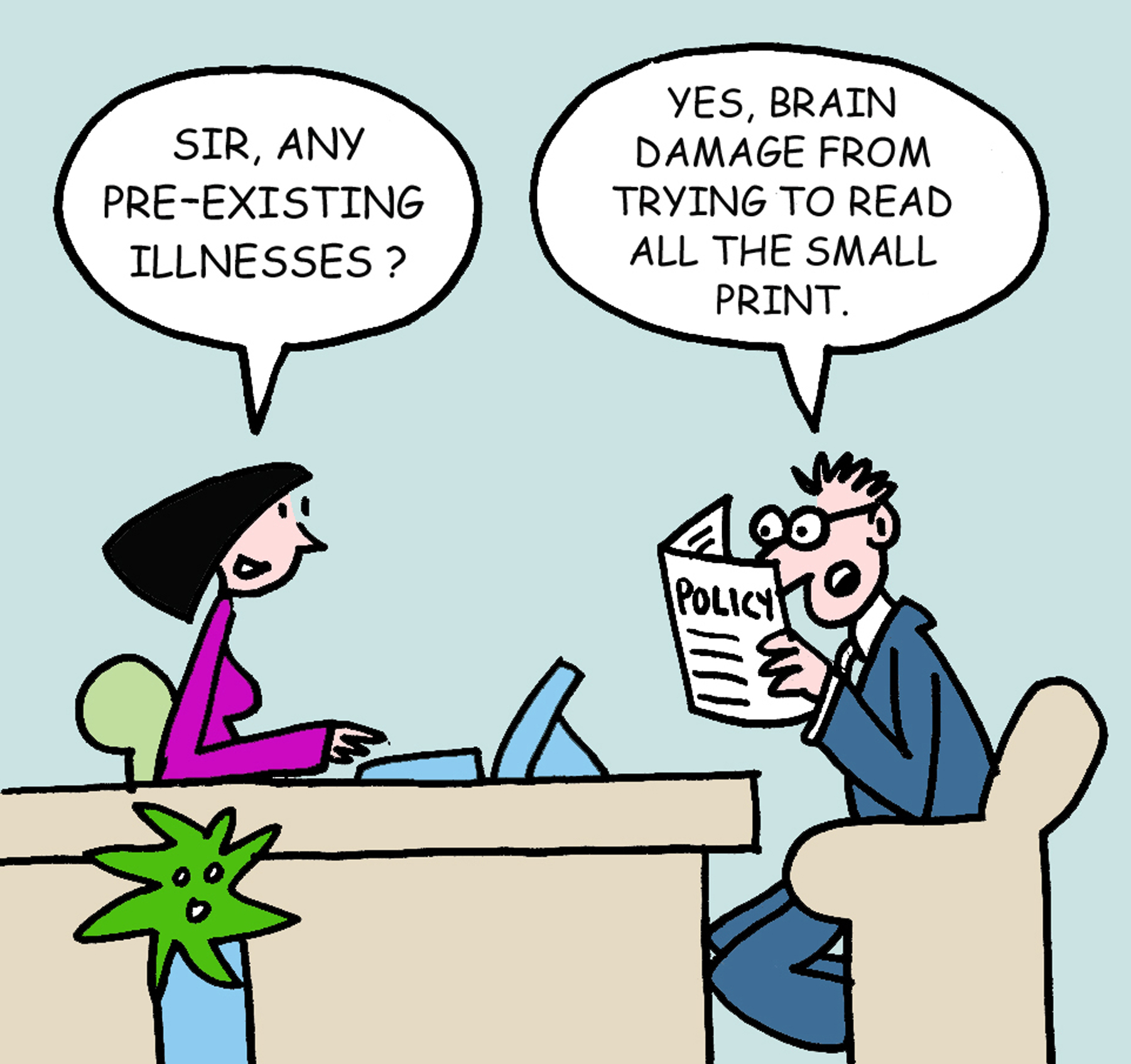
Apart from tracking your periodic expenses, it is also important to have an estimate for your net worth at any point in time. While it is common for people to have cash milestones over their lifetimes (who wants to be a millionaire?), it is often more practical to have a "net worth" or "net value" target instead, especially given the significant opportunity costs associated with holding too much cash. Knowing your current net worth gives you an idea of how far you are from your financial goal and how much more you have to work to reach that goal, taking into account how many of us actually owe more than we own (see cartoon above). Also, a net worth estimate gives you a realistic measure of how much cash you can readily raise in case of an unforeseen need.

Estimating your net worth involves constructing some sort of personal balance sheet, which should very similar to the "statement of assets and liabilities" that we often hear associated with delinquent politicians and government officials. There are two key differences between this personal balance sheet and the actual balance sheet of a business or an individual's statement of assets and liabilities:
  1. We record assets and liabilities based or their current market value and not on their historical or acquisition cost
  2. Apart from financial and real assets, we also consider human capital--how much one's future earning potential is worth today
Market value vs. acquisition cost

The generally-accepted accounting practice is to record the acquisition cost of assets and just deduct an estimated deterioration in value--a practiced referred to as adjusting for depreciation. While it is often practical to use this method to record assets, at times the difference between this value and an asset's current market value--the price one can get if one sells the asset today--could be substantial. And since what we are interested in is how much money we can actually get for our assets at any given time, and not the amount we paid for the asset when we bought it (which is, in most instances, irrelevant information, if you recall one of the points in our previous post), it is more practical to use market values instead of historical costs.

One downside of using market values is that it is sometimes easier said than done. While the market value of some assets (such as cash, shares of stock, bonds, and investments in UITFs or mutual funds) are freely and publicly available, estimating the current worth of other assets like personal property (e.g., vehicles, jewelry, artwork) and real property may take a bit more effort and guesswork. The simplest way to estimate the market value of such assets is checking how much similar items are going for in the market. We can look at classifieds and publications like Buy & Sell for recent price information. If you have property in Sta. Rosa, Laguna, for example, then check how much similar properties nearby are going for per square meter, then just adjust according to the size of your own property. We can also turn to auction websites like eBay and Sulit.ph for this information.

If current market prices are difficult to come by, then you can just always resort to the acquisition cost method. If you think your asset loses a portion of its value over time due to use or natural wear and tear, then you can estimate it's current value using this formula:

Value = acquisition cost - (number of years you have used the asset / useful life of the asset)*acquisition cost
= acquisition cost [1 - (number of years you have used the asset / useful life)]

Where

Acquisition cost / useful life = annual depreciation

If you decide to use these formulas, you have to estimate how long you can use the asset (i.e., useful life, in years) and assume that it will be worth nothing at the end of its useful life.

Of course, if you know a bit about the mathematics of finance and the time value of money, you can always use the discounted cash flow (DCF) approach, where the current worth of an asset is just equal to the present value of the future cash flows that it is able to generate.

In Part 2, we will discuss human capital--what it is and how to estimate its value--and common items that are found on a personal balance sheet.

Monday, November 14, 2011

Pop Quiz Results: A Closer Look at How We Make Decisions


The point of this exercise is to demonstrate the way we make decisions and the rules of thumb or heuristics that we employ--often subconsciously--whenever we face situations with only incomplete or imperfect information.

Nine have dared face the challenge. Let's see how these brave souls have fared.

1. A town has two schools: one large and one small. Assuming there is an equal number of boys and girls born every year in the Philippines, which school is more likely to have close to 50 percent girls and 50 percent boys born on any given day?

A. The larger
B. The smaller
C. About the same (say, within 5 percent of each other)

The obvious answer is C since, by intuition, the size of the school should not matter much, if at all. However, if we recall our college or high school statistics, the size of the sample does matter: the bigger the sample is, the more likely our estimate is closer to the actual value (more specifically, the variance of all possible estimates is inversely proportional to the sample size); therefore, the correct answer is A (6 of 9). The infuriating thing about statistics is that important relationships like this don't make a lot of sense at first glance, so are easily taken for granted by people, especially in real world situations.

2. A team of psychologists performed personality tests on 100 professionals, of which 30 were engineers and 70 were lawyers. Brief descriptions were written for each subject. The following is a sample of one of the resulting descriptions:

Juan is a 45-year-old man. He is married and has four children. He is generally conservative, careful, and ambitious. He shows no interest in political and social issues and spends most of his free time on his many hobbies, which include home carpentry, sailing, and mathematics.

What is the probability that Jack is one of the 30 engineers?

A. 10–40 percent
B. 40–60 percent
C. 60–80 percent
D. 80–100 percent

Since 30 out of the 100 professionals that were interviewed are engineers, the probability that Jack is an engineer is 30%, so the correct answer is A (5 of 9). The reason why some people would think of a higher probability is that they associate the characteristics mentioned in the given description--like being interested in carpentry, sailing, and mathematics--to being an engineer, even if no actual data supports such an association. This rule of thumb is called the representativeness heuristic.

3a. How many dates did you have last month?

A. 1–3
B. 3–5
C. 0

3b. On a scale of 1 to 5, how happy are you these days (5 being the happiest)?

A. 1
B. 2
C. 3
D. 4
E. 5

It should be obvious that this one doesn't have a correct answer; the point of these two questions is to demonstrate that the first question can easily influence our answer to the next. From the answers of our respondents, we see that a higher number of dates in 3a would likely lead to greater happiness in 3b, and vice versa. However, if the order of the questions were reversed, it's highly likely that responses to the happiness question would have little correlation with the dating question. This demonstrates that how questions or alternatives are presented do affect decision making, even if decision theory tells us that they should not. This phenomenon is referred to as the framing effect.

4. Imagine that you decided to see a play and you paid 500 pesos for the admission price of one ticket. As you enter the theater, you discover that you have lost the ticket. The theater keeps no record of ticket purchasers, so the ticket cannot be recovered. Would you pay 500 pesos for another ticket to the play?

A. Yes
B. No

This question demonstrates two important concepts in decision making. The first is the concept of the sunk cost: that is, past, irrecoverable costs should be irrelevant in decision making. In this situation, the lost ticket would definitely qualify as a sunk cost, so if one really wants to watch the play, then one should not hesitate to pay for another ticket, an alternative which most of our respondents have chosen (6 of 9). However, to a great degree the answer to the question is a matter of personal choice, so there really isn't a correct answer to this question.

We can also use the question to illustrate how framing works. Experiments show that most people would actually choose not to buy a ticket, an indication that people do consider sunk costs in making decisions. If you answered "no" to the question, then consider this analogous scenario:

Imagine that you decide to see a play and you will pay 500 pesos for the admission price of one ticket at the door. As you enter the theater, you discover that you have lost a 500 peso bill. Would you still pay 500 peso for a ticket to the play?

Experiments show that people who answer "no" to the first question would often answer "yes" to the second; this does not make a lot of sense since the two situations are the same and represent the same economic loss of 500 pesos, albeit expressed or framed differently. It's like agreeing to buy a glass that's half-full for a certain price, then refusing to buy a half-empty glass for the same price.

5a. Choose between getting 9,000 pesos for sure or a 90 percent chance of getting 10,000 pesos.

A. Getting 9,000
B. 90 percent chance of getting 10,000

5b. Choose between losing 9,000 for sure or a 90 percent chance of losing 10,000.

A. Losing 9,000
B. 90 percent chance of losing 10,000

Again, these two questions have no definite correct answer, but are used to demonstrate that people often weigh gains and losses differently. Actual experimental data (I have actually always asked my finance students to answer these two questions) show that respondents tend to answer A and then B (7 out of 9 of you did :)); this result is anomalous since choosing A in the first question is a sign of risk aversion while choosing B in the second question is indicative of risk-seeking behavior. In other words, we can't simply classify decision makers as being "risk averse" or "risk seeking," as traditional decision theory tells us, since individuals can easily avoid risk in a particular situation, then seek it in another, or vice versa. This phenomenon is referred to as prospect theory.

These questions come from a Vanity Fair feature on Nobel Laureate Daniel Kahneman who, together with Amos Tversky, paved the way for behavioral finance/economics/decision making into becoming popular fields of academic research and pretty much debunked the myth of the rational decision maker and the economic theories that are based on this assumption.

Next week, we'll talk more about the heuristics and anomalies that we talked about in this post, and a few others that we have not covered.

It's not enough to just know how people should make decisions: it pays to also know how people actually do.

Thursday, November 10, 2011

Pop Quiz


1. A town has two schools: one large and one small. Assuming there is an equal number of boys and girls born every year in the Philippines, which school is more likely to have close to 50 percent girls and 50 percent boys born on any given day?

A. The larger
B. The smaller
C. About the same (say, within 5 percent of each other)

2. A team of psychologists performed personality tests on 100 professionals, of which 30 were engineers and 70 were lawyers. Brief descriptions were written for each subject. The following is a sample of one of the resulting descriptions:

Juan is a 45-year-old man. He is married and has four children. He is generally conservative, careful, and ambitious. He shows no interest in political and social issues and spends most of his free time on his many hobbies, which include home carpentry, sailing, and mathematics.

What is the probability that Jack is one of the 30 engineers?

A. 10–40 percent
B. 40–60 percent
C. 60–80 percent
D. 80–100 percent

3a. How many dates did you have last month?

A. 1–3
B. 3–5
C. 0

3b. On a scale of 1 to 5, how happy are you these days (5 being the happiest)?

A. 1
B. 2
C. 3
D. 4
E. 5

4. Imagine that you decided to see a play and you paid 500 pesos for the admission price of one ticket. As you enter the theater, you discover that you have lost the ticket. The theater keeps no record of ticket purchasers, so the ticket cannot be recovered. Would you pay 500 pesos for another ticket to the play?

A. Yes
B. No

5a. Choose between getting 9,000 pesos for sure or a 90 percent chance of getting 10,000 pesos.

A. Getting 9,000
B. 90 percent chance of getting 10,000

5b. Choose between losing 9,000 for sure or a 90 percent chance of losing 10,000.

A. Losing 9,000
B. 90 percent chance of losing 10,000

*** END OF QUIZ ***

Please post your answers on the comments sections below. On Monday I'll tell you what this is all about, so finished or not finished, pass your papers! If you already know what this is, please don't spoil it for the others--thanks in advance--and just state your answers on the comments section.

Monday, November 7, 2011

My Take on the Best Statistics Question Ever


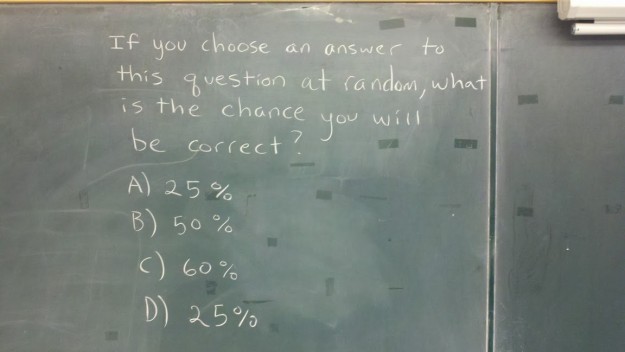
A difficulty that students often face is that exam questions like this may be interpreted a number of ways, with each interpretation leading to a distinctly different answer. In this post, I offer two such interpretations.

The first leads to the same answer as one of our readers: "0% the correct answer is not among the choices." Here we assume that the question that needs a correct answer is "what is the chance you will be correct," and that you would only be "correct" if the probability of picking your answer is the same as the value of your chosen answer.

Say, you randomly pick "25%". Since two out of the four choices represent "25%", then the probability of randomly picking it is 50% (assuming equal likelihood). And since your answer--25%--is not the same as the probability of picking your answer--50%--then you will have been incorrect.

Using the same logic, it's easy to see how picking the other two available choices, 50% and 60%, would also be incorrect. This means that the chance that you will be correct is zero--there is no chance that you will be right!

Of course, if you read the problem differently, you should arrive at a different answer. For example, if we assume that "being correct" refers to some other arbitrary question, that the choices pertain to that question and not to the chance that your answer will be correct, and that one of the given choices is the correct answer, then we'll arrive at an altogether different solution.

We are still interested in the probability of randomly picking a correct answer, but this time we do not limit this probability to the given choices. We could go through equations and basic laws of probability to solve the problem, and in the end we'll most probably arrive at the correct solution, but there is a simple way of reasoning out the correct solution instead. 

First we recognize that there are only three possible answers to the problem: 25%, 50%, and 60%. If we assume that the three are equally likely to be the correct answer, then the probability that each will be correct is 1/3. Or,
  • If C = the correct answer, where C = 25%, 50%, or 60%. Assuming these choices are equally likely to be correct, then the probability of C, P(C = 25%) = P(C = 50%) = P(C = 60%) = 1/3.

Since the probabilities are all the same, then the actual choice we pick does not matter: whatever we choose, the probability that it will be the correct answer is 1/3.

Can you think of another approach to solving the problem? Feel free to share your thoughts in the comments section below.

Thursday, November 3, 2011

Monday, October 31, 2011

PLDT-Digitel Deal Finally Gets NTC Approval

IN THE NEWS from Business World Online


After seven months and three postponements, the much talked about PLDT-Digitel deal, which first broke out on Investor Juan, finally gets the approval of the National Telecommunications Commission. The deal provides the PLDT-Digitel union with a dominant 70% share of the market and leaves Globe at farther second, eliciting criticisms from various sectors who fear that the industry might revert to a monopoly.

The approval comes with the following conditions:

  1. That PLDT-Digitel offer Sun Cellular's unlimited text and call services permanently.
  2. That PLDT and Digitel "continue providing high quality service to their respective subscribers."
  3. That PLDT divest 10 megahertz of 3G frequencies held by Smart. Said frequencies will be auctioned off and PLDT will not be allowed to bid.
All three parties involved--PLDT, Digitel, and Globe--have reportedly expressed their acceptance of the conditions laid out by the NTC.

If we take a closer look at these conditions, it seems that the only one that matters to Globe would be the last one, that the most important (or perhaps, only) reason why it tried to block the deal was that it wanted those valuable 3G frequencies as a form of concession. I mean, who is the NTC kidding? The first two conditions are clearly inutile. First, I don't think NTC is in any position to dictate what any player should sell, much less sell permanently. And even if by the slightest chance NTC does have that power, it does not say anywhere that PLDT-Digitel cannot increase the price of these unlimited services. Second, what does "high quality service" even mean? Would Sun Cellular's services pre-merger qualify as being "high quality"? This one has so many holes, a blind man would have trouble not seeing through it.

Anyway, perhaps what's important is that everyone seems to have gotten what everyone wanted. That is, everyone except investors and consumers; what happens to them remains to be seen. Would investors finally be able to see their bet from seven months ago pay off with NTC's approval. Maybe. Would the deal really benefit consumers in the long run, as what the major players and some observers argue? We'll see.

Friday, October 28, 2011

Revisiting that Real-World Exam-Type Problem

DEAR INVESTOR JUAN


Dear Investor Juan,

I hope that my e-mail finds you well and patient for yet another question.

I have been a little concerned with the knowledge that my insurance plan is now owned by another insurance company, Philfirst. From my point of view, it just shows how fickle insurance companies are... Because of this, I have read several articles on how to check if your insurance company is stable. 
First, they say, is to check with the insurance regulation commission, next is to check for financial ratings and financial statements,then listen for current news about the insurance company and then watch stock trends.

Most of these things are foreign to me. I don't know how to get those information or maybe what to make of it once I see it. The farthest I could go was to check that Phil first is indeed listed in the government insurance site. But what assurance can that give me (as you said) that the company would still be in business after 10 years?

I understand that this may be a decision I have to make for myself. I do not want to end up being another "CAP" victim and yet I also do not want to over worry myself for nothing. Would it be too much to ask if you give me your personal opinion about the matter i.e., what would you do if you were in my shoes?

I am not financially savvy as you may have well guessed from my emails but I just want to find a better way to know if my insurance company will still be there when my plan matures. I understand no one can guarantee an answer but isn't there a way to make a good guess, at the least?

Respectfully yours,
Anonymous


Dear Anonymous,

Hello again! Let's try to take a look at and think about things without having to bother with financial statements and all that boring stuff.

First, I don't think the offer (to retire your investment early) signals any trouble on the side of the new owners, as that comment of one of our readers seems to suggest: what it essentially is is the company's attempt to pare down its future obligations in an above-board manner as it tries to generate new sales from the purchase. Out of, say, thousands of policy holders, I'm pretty sure that more than a few will find the offer attractive enough to bite, especially since a lot of us still take the time value of money for granted or don't know how to apply it to situations outside the classroom. It's a strategy that is meant to boost the firm's value, and even if only a small proportion of plan holders accept the offer, it's a strategy that will have worked. In fact, since the offer actually decreases the risk that the firm will not be able to meet its future obligations, it actually works in favor of those who do not accept it.

Second, you would have to form an opinion about the new owners, namely Philfirst and STI. STI is more familiar to most of us: it has a solid business model which generates a lot of cash, although admittedly the computer and nursing education businesses are not as glittery as they once were. Philfirst, I'm not very familiar with, and less so the firm's controlling figure, Mr. Eusebio H. Tanco. The information on the group's website, though--assuming everything is true--should be able to allay some of your concerns. The group is supposedly awash in cash, and a big part of it is in a trust that no errant manager could be able to put his or her hands on. All this means that in terms of capacity to meet future obligations, Philplans seems to have enough to erase (at least some of) your worries.

Finally, I think it's unlikely that Philplans will be another CAP. First, while like CAP, Philplans is also in the pre-need educational plan business, unlike CAP (as far as I know), it's also into life insurance and HMOs. And unlike pre-need educational plans, where policy holders are certain to collect at a particular future date, risk is better spread in the life insurance and HMO businesses, which makes them more lucrative and less risky to both the insurer and policyholders. So even if, for whatever reason, Philplan's pre-need educational business tanks, life and HMO should be able to generate enough business to stem the bleeding of the company as a whole. Essentially, being diversified into revenue streams or businesses that are not perfectly correlated lessens the risk exposure of Philplans which customers would also benefit from.

Well, I guess that's the best I can do short of actually performing due diligence. Just to make myself clear, my personal opinion is that you reject the offer and stick with your plan.

Good luck, and I hope to hear from you again.

Related Posts Plugin for WordPress, Blogger...